

Collectibles
Discovery & MVP Strategy
Defining an MVP strategy for an AI-driven collectibles management product
Early-stage startup exploring an AI-powered platform to help collectors catalog, manage, and track the value of diverse collectible assets.
Services Provided
Market & User Research
Competitive & Category Analysis
Product Strategy & MVP Definition
The collectibles market has evolved from niche hobbyist communities into a global, multi-hundred-billion-dollar ecosystem. What was once driven primarily by passion and nostalgia is now increasingly shaped by investment behavior, price transparency, grading services, and digital resale platforms.
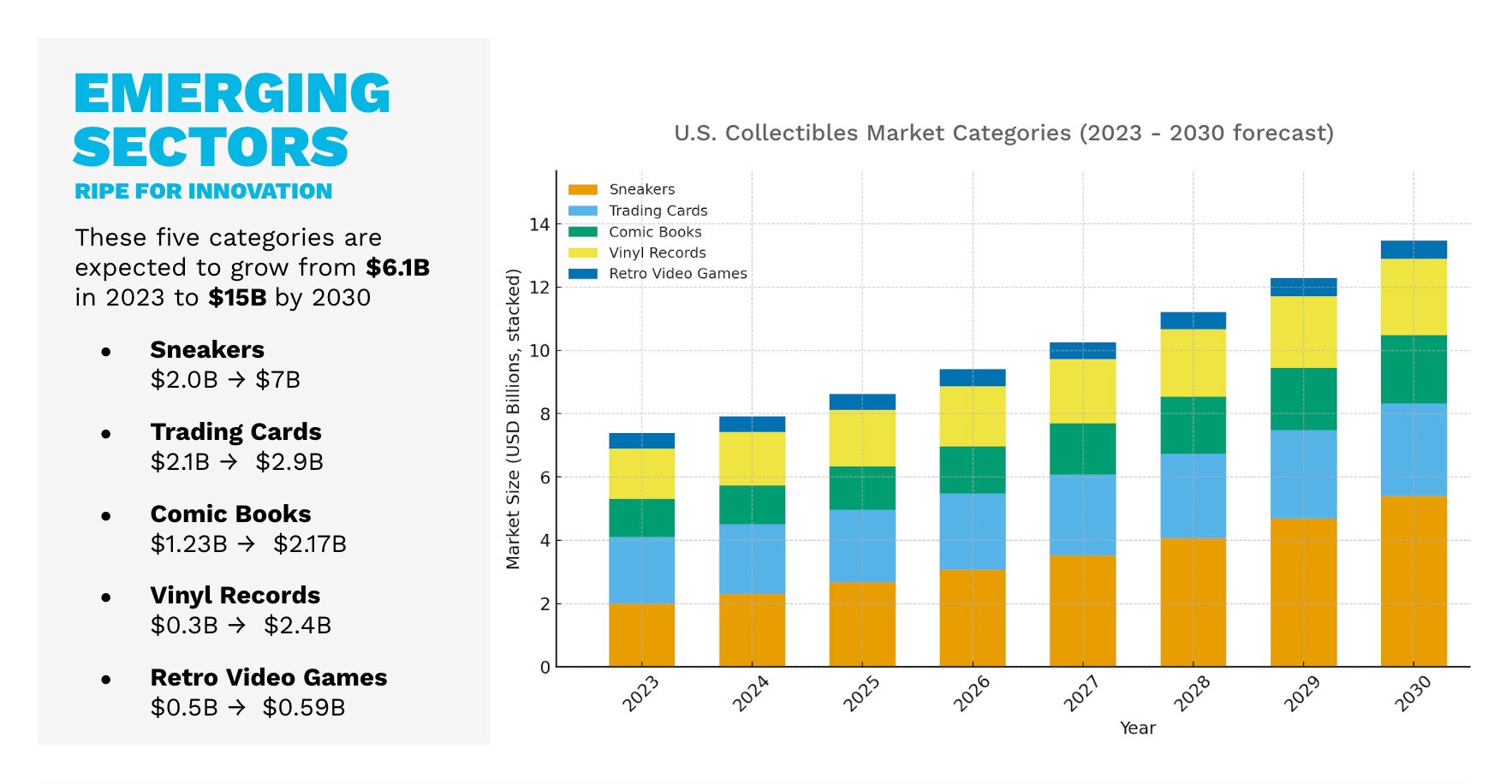
According to market analysis conducted as part of this engagement, the U.S. collectibles market generated over $62B in revenue in 2024, with projections reaching $83B by 2030, while the global market is expected to exceed $420B in the same timeframe . Growth is not limited to a single category — sneakers, trading cards, comic books, vinyl records, and retro video games all show sustained or accelerating demand.
The client was building a new application that uses AI to help users catalog, organize, and track the value of their collectibles across categories. Before committing to an MVP, the team needed clarity on where real value existed, which user types to prioritize, and how to focus limited development resources for maximum return.
The Challenge
The challenge was not validating market size — the opportunity was already clear. The real questions were strategic:
Which collector segments were most underserved by existing tools?
Which categories showed both growth and fragmentation?
What problems were shared across collectors, investors, flippers, and professional sellers?
Where could AI meaningfully improve workflows rather than add novelty?
What should the MVP include — and, just as importantly, what should it exclude?
Without a focused strategy, there was a risk of building a broad but shallow product that failed to resonate with any core audience.
Our Role
Parallel² partnered with the founding team to lead market and user research, with the explicit goal of informing product direction and MVP scope.
Our role was to:
Analyze market size, growth, and category dynamics
Identify core user types and behaviors
Surface shared and divergent pain points
Translate research insights into actionable product priorities
Rather than producing research in isolation, the work was structured to directly support decision-making.
Approach
Market & Category Analysis
We analyzed the collectibles market across major categories, including:
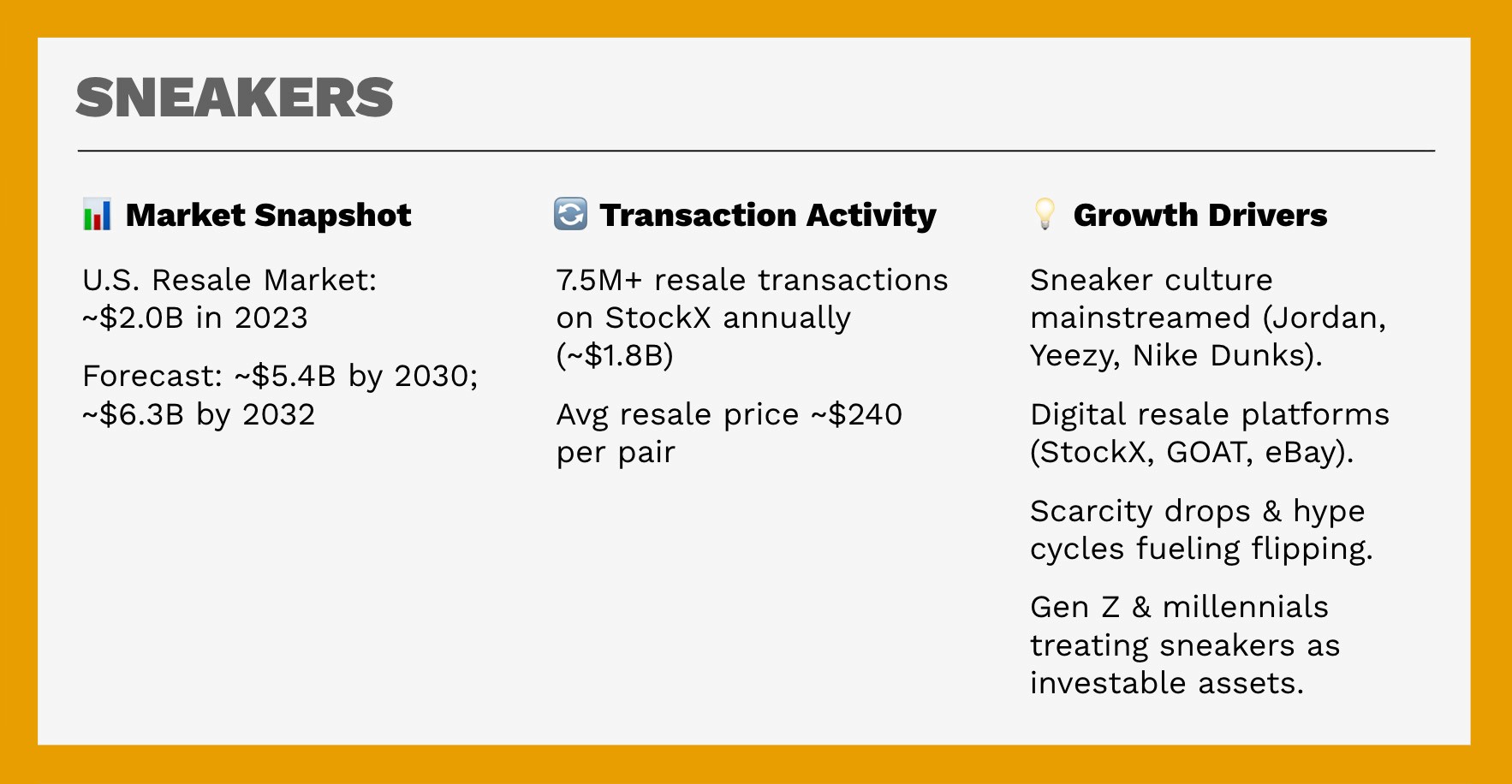
Sneakers
Trading cards
Comic books
Vinyl records
Retro video games
The research examined:
Historical performance
Post-COVID corrections and stabilization
Forecast growth through 2030+
The role of grading, marketplaces, and cultural drivers
This revealed a market that, while volatile in places, remains resilient and increasingly institutionalized, with secondary markets playing a central role.
User Segmentation
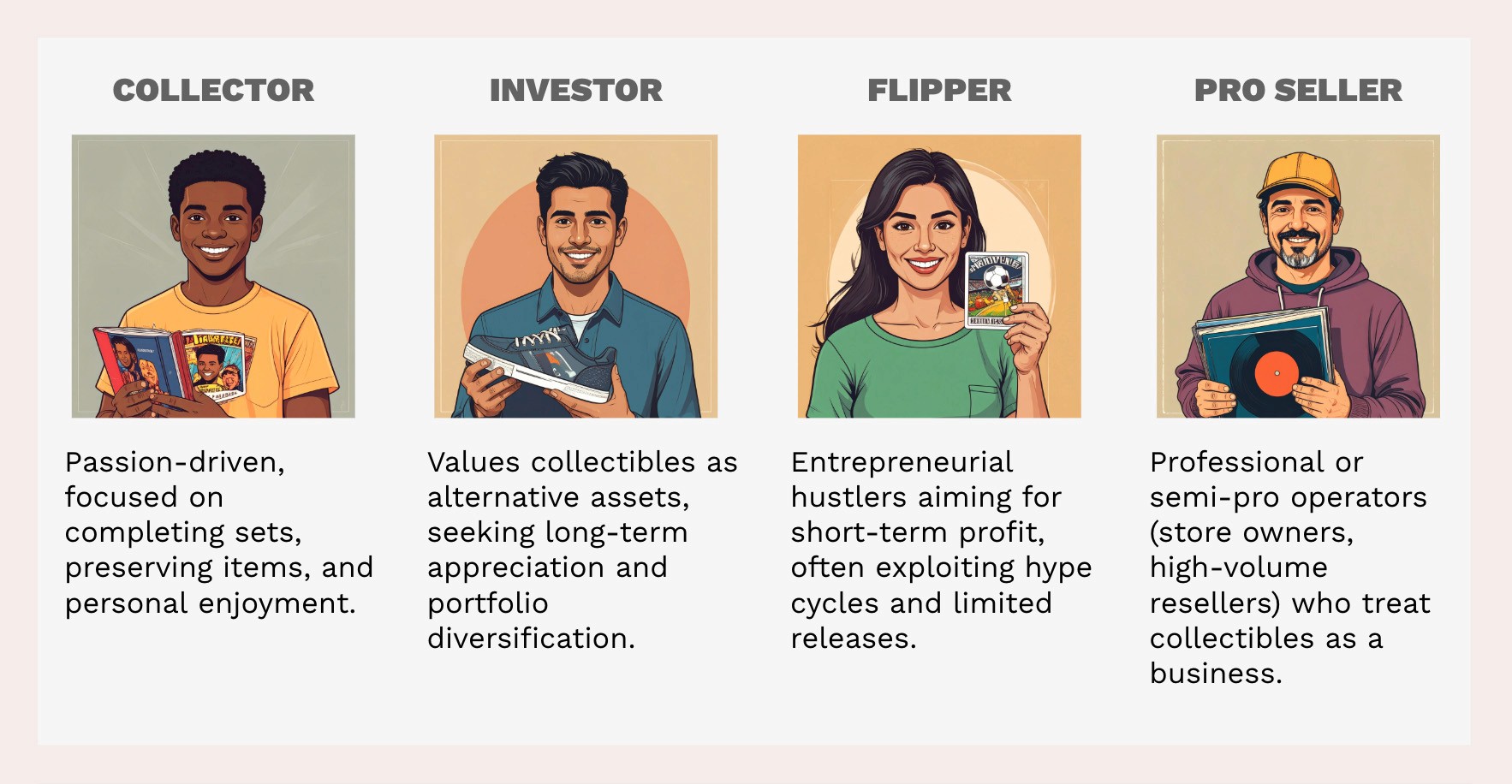
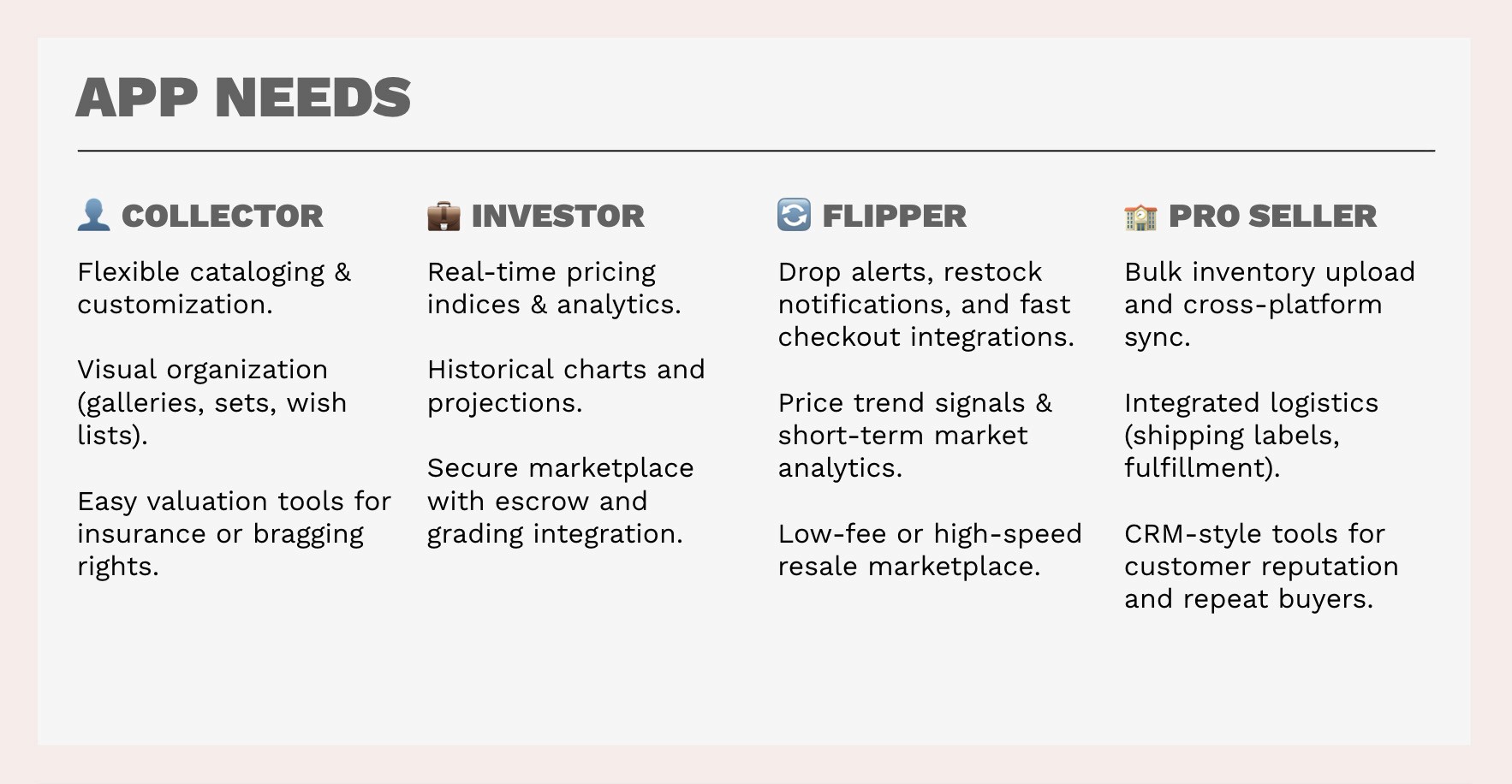
The research identified four primary user types operating across collectibles ecosystems:
Collectors — passion-driven users focused on completion, preservation, and enjoyment
Investors — users treating collectibles as alternative assets and long-term stores of value
Flippers — opportunistic buyers focused on short-term arbitrage and hype cycles
Professional Sellers — high-volume operators running resale as a business
Each group exhibited distinct motivations, behaviors, and constraints, but also shared several overlapping needs.
Pain Point & Needs Analysis
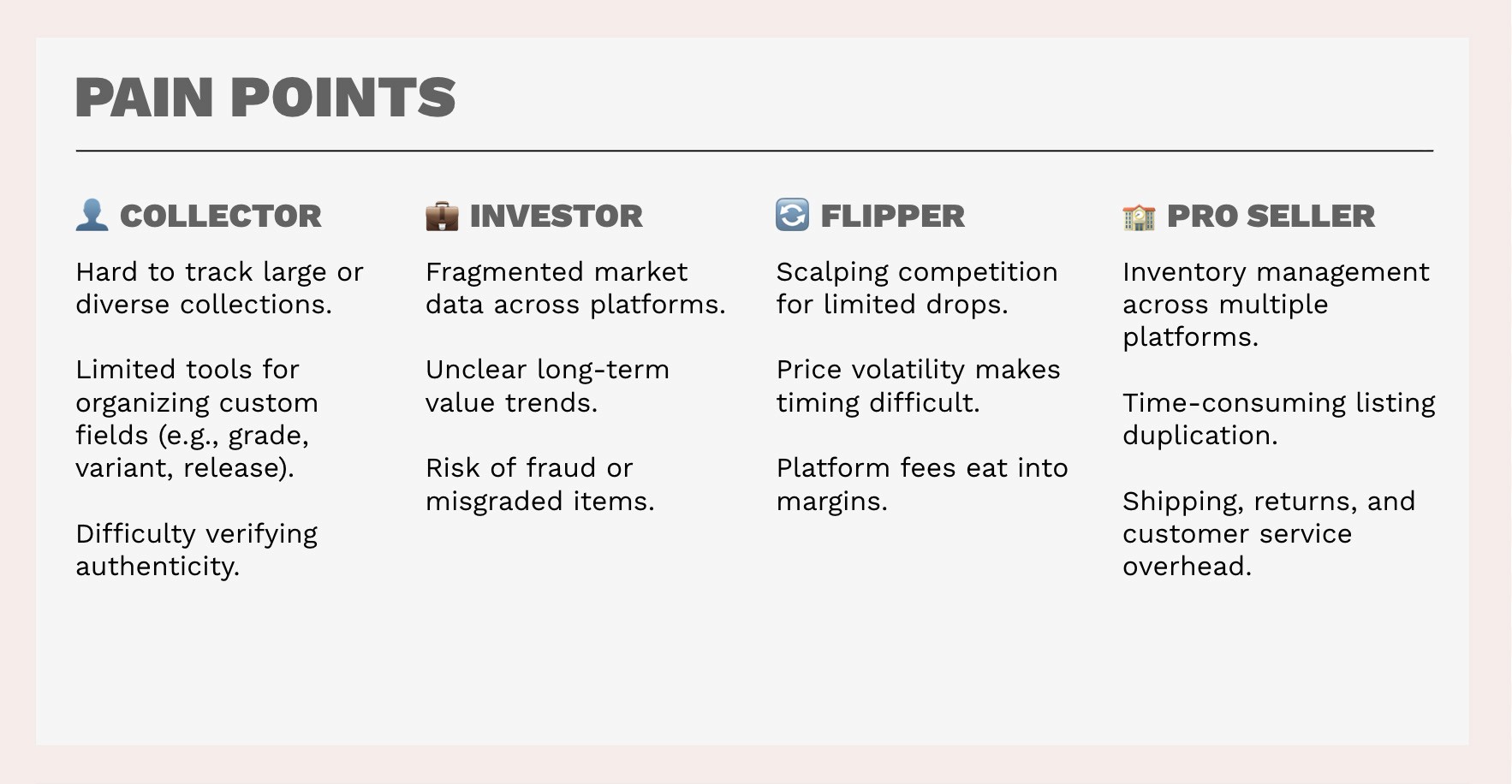
Across segments, the research surfaced consistent challenges:
Difficulty tracking large or diverse collections
Fragmented data across platforms
Limited customization for cataloging and metadata
Poor visibility into long-term value trends
Time-consuming manual processes
Professional sellers faced additional operational burdens, including inventory management, cross-platform duplication, and logistics overhead.
Key Insights
1. The market is large, but highly fragmented
Collectors rely on a patchwork of spreadsheets, niche tools, and marketplaces with no unified view.
2. Growth categories are not evenly served
Sneakers and trading cards have strong resale infrastructure, while comics, vinyl, and retro games remain underserved digitally.
3. User motivation shapes product expectations
Passion-driven collectors value organization and presentation, while investors prioritize valuation and trends.
4. AI value lies in synthesis, not prediction
Users want help organizing, interpreting, and contextualizing data — not opaque “black box” forecasts.
5. MVP success depends on focus
Attempting to serve all user types equally would dilute value and slow adoption.
6. Cataloging is the universal entry point
Flexible, customizable cataloging emerged as the strongest cross-segment need.
7. Market data alone is not enough
Users struggle to translate raw pricing data into meaningful insight.
8. Trust and credibility matter across segments
Authentication, grading integration, and transparent data sources increase confidence.
Outcome
The research directly informed the company’s MVP strategy.
A sample of the research can be found here →
Key outcomes included:
Clear prioritization of core user segments for initial launch
Focus on cataloging, organization, and valuation visibility as foundational features
De-prioritization of speculative AI features in favor of practical workflows
A roadmap aligned with the highest return on development effort
Rather than building a broad, unfocused platform, the team moved forward with a clearly defined MVP designed to validate demand and scale intelligently.
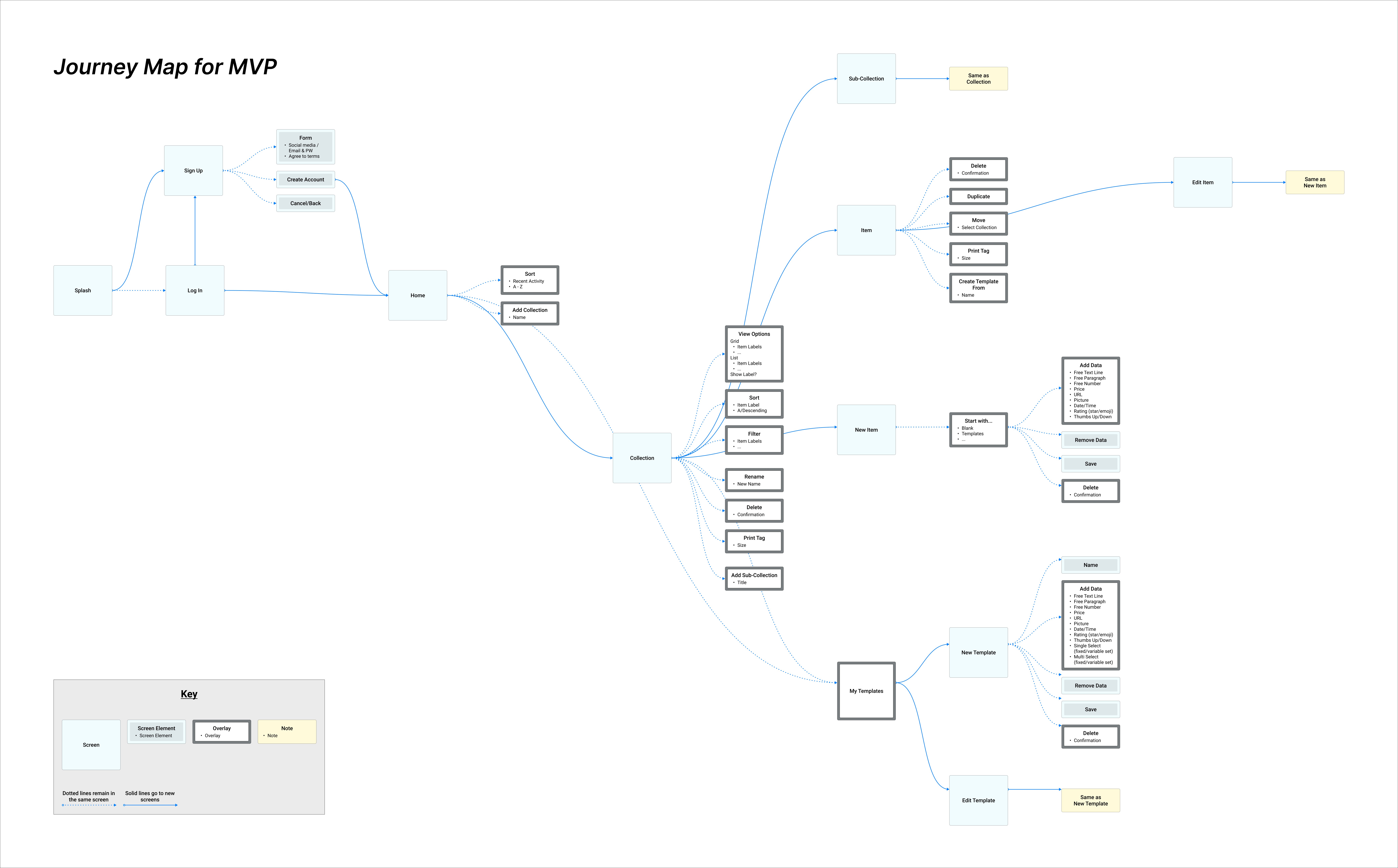
The product is currently under development, grounded in the strategic clarity provided by the research.
Reflection
This engagement reinforced that strong market research is not about volume of data — it’s about reducing uncertainty.
By connecting market dynamics, user behavior, and product decisions, the research helped transform a large opportunity into a focused, executable plan.